
How (Not) to Author an Autobiography
Introduction – Everybody’s Got a Story
We’ve all got stories, whether we realize it or not. In fact, it’s something most of us engage in every day: We introduce ourselves, our histories, and our best or worst moments to folks we’re familiar with or absolute strangers we want to socialize with. Those moments—where you’re telling someone about your new job and partner, or maybe your recent break up and layoff—are capsules of what an autobiography can be.
Much like the uncle or friend who can’t (and won’t) stop telling bad stories and jokes, there are more than a few missteps you can make in telling your story; unlike your reaction of quietly nodding and nodding off, these missteps could make you lose agents, audiences, and publishers. We’ll delve into what makes an autobiography bad enough for readers to drop dead from boredom and give a few tips on how to remedy them.
“If you write honestly, the hero will emerge.” – Malcom X
Prerequisites – The Anatomy of Autobiography Compared to Memoir
The recent popularity of autobiography due to the accessibility that avenues like self-publishing provide has coincided with the rise of a similar genre: the memoir. As such, it’s tempting to use the two genres interchangeably. After all, they’re both essentially the same thing, right? Both genres are a self-written account of one’s life, relying heavily on the subjective views and experiences of the author-narrator. While these similarities ring somewhat true, the two genres aren’t exactly equal in comparison.
Memoir, for instance, was and is often considered a subcategory of autobiography. Memoirs tend to be narrower in scope compared to autobiographies: Usually they focus on specific episodes of an author’s experiences and rely more heavily on the author’s interiority—their emotions, thoughts, and above all else memory—as opposed to factual, exterior account. In contrast, autobiography tends to be wider in scope—sometimes focused on an author’s entire life—which often necessitates outside sources. This wider scope also lends itself to greater exteriority, often examining the important figures in one’s life like parents, peers, and romantic partners to name a few examples. In addition, autobiographies can intersect with other genres, such as fiction or theory, that aren’t as compatible with memoir. A general rule of thumb: Memoirs are like memories, where you’re focused on you and your experience, while autobiographies are bigger in terms of scope and scale.
Warm-Up – Anecdotal Evidence
Think back to the best and worst stories you’ve been told by the folks in your life. Maybe your relative told a silly and ridiculous story about a younger version of you that made you cringe, or your best friend is telling you about how they got engaged in a way that makes your heart swell with affection (or disgust). These stories—the ones that provoke strong emotional reactions that may border on the visceral—are the most successful because you, the audience, connect with it. This connection is the goal of all autobiographies.
Take note of a few things:
What provoked the strongest reactions out of you? Why?
How did this person tell the story? What words did they use to describe it?
What do you remember more: a specific sentence, or a sequence of events? Why?
Which elements of the story do you remember the most? The least?
How have you told stories? How have other people reacted to your stories?

“Autobiography is usually honest but it is never truthful.” -Robert A. Heinlein
Tips, Tricks, and Traps of the Trade
Now that we’ve defined what an autobiography is alongside our guiding principles, there are a few specific things to tackle: the tips, tricks, and traps that make or break autobiographies and their success. Keep in mind that while none of these are hard and fast things to aim toward or avoid, they are staples of the genre for a reason.
Don’t make things go on, and on, and on . . . Keep it short, simple, and sweet!
Almost every writer (myself included) has a tendency to talk much longer than they should. After all, the compulsive urge to draw every minor detail is important to many; it’s an act of reconstructing memory or engaging our imagination. Unfortunately, this kind of excessive detailing can bore a reader to (figurative) death. Take stock of what is and isn’t important to what you wish to tell and what you wish to say; if you’re focused on a family fight between you and your parents, it’s best not to spend two pages talking about the wallpaper or flooring when you want to ground the scene in the heightened emotions of the conflict. It’s best practice to cut right to the heart and action of what’s happening in any given scene, then unwind it through brief and clear analysis.
However, details and lengthy prose can be useful for providing one of the most important things when you’re telling a story: context! This is especially useful if you plan on returning to those details later as a kind of Chekhov’s gun; if you’re going to smash your grandma’s antique china later in the narrative, spend a paragraph or two detailing their beauty and history so readers know to keep an eye on it throughout the narrative. Like the previous paragraph, don’t belabor the point, or else you’ll risk spoiling the intended emotional effect.
Wait, what’s that? Maintain focus on your message!
The worst kind of story wanders without a purpose, like when your beloved narrator decides to switch mid-sentence to talk about exploding trousers. It derails the narrative and any point you’re trying to make. The previous section alluded to this a bit, but make sure you keep a relatively tight focus on what you want to accomplish and how your prose will best serve that. It’s important to note here that even related tangents can diminish a reader’s focus on your main message. For example, if you talk about the importance of discipline and include another person who is undisciplined and never punished for it, the message gets muddled for the reader.
However, not all messages are clear-cut. In some autobiographies, a muddled message may be exactly the point on contentious topics or questions. For these kinds of narratives, it’s best to pair off specific scenes and events to draw connections between them, then narrow that connection down until you get a message. This kind of dialogue between extremes is considerably trickier to pull off but can work wonderfully if executed successfully.
Who’s talking? Visualize it in your voice!
Have you ever heard a story from two different perspectives? Each person likely had their own way of recounting what happened—maybe they added their personal flair and flourishes to how and what got told—in a way that felt unique to each. What makes a barebone story special is voice; not just what is tackled, but how it’s tackled goes an incredibly long way towards endearing readers, regardless of content. Don’t take this tip as a ticket to perform, however, as you’ll risk losing readers with a sense of inauthenticity.
If you struggle to write in your voice, or don’t know exactly what your voice sounds like in prose, take a moment to think about a story you would tell (or have told). Recite a version of it you would tell your friends, then your family, then to a stranger. Take note of what stays consistent across each telling, and what changes. What remains consistent are the features of your voice that you’ll want to focus on in your prose. What changes are the stylistic flourishes that constitute your various registers, which can be incredibly useful in varying the prose and storytelling to maintain reader engagement. For example, an intimate scene may call for a register reserved for family, while a humorous scene may call for a register used with friends, and a technical scene may call for a register used with strangers. Done successfully, using all of your registers paints a better picture of who you are not just as an author, but as a human being.
So boring . . . Dramatize!
Listen, we’re all familiar with the most rote parts of our lives: work, school, waiting in line at the DMV . . . These places, however, can be the source of funny and beautiful things! Even the most mundane things in our lives can be spiced up a bit, literally and metaphorically. Maybe your morning coffee has creamer swirling up in the shapes of storm clouds, or the person on the street is wearing something so beautiful that you wish you had it in your closet. If you’re including something mundane, focus on why you’re telling it and what details can be amped up to achieve that effect.
There might be the temptation to dramatize for the sake of tension or stakes—adding things that may not be present for the sake of what constitutes a good story—but be aware that doing such things may lose a reader’s trust. Additionally, it’s best to avoid this entirely when discussing other people beyond your own subjective judgements of them.
“Unless I am allowed to tell the story of my life in my own way, I cannot tell it at all.” -Mary Seacole
Conclusion
While writing an autobiography can be incredibly difficult, it can be equally rewarding telling your story. It’s something we’re built for; telling stories is another way of expressing our humanity. Much like any skill, our ability to tell stories can be sharpened until it can cut to the truth of whatever message we want to tell and reach everyone regardless of who we are.
Resources
Writing Autobiography – Paul Heiney discusses what makes an engaging autobiography.
How to Write Autobiography: 9 Essential Steps – Nadia Colburn talks through a step-by-step process for creating an autobiography.
Memoir, Biography, Autobiography: What’s Right for You? – Rachel Thompson walks through the differences between memoir, biography, and autobiography, while discussing which medium may be right for you.
How to Write an Autobiography: The Secret Tips to Finally Get Started – Curtis Bisel gives a few tips on how to get started writing your autobiography.
Types of Autobiography: 6 Major Types and 5 Literary Forms Explained – Doctor David Morgan delves further into the subgenres of autobiography, and which ones may be right for you.
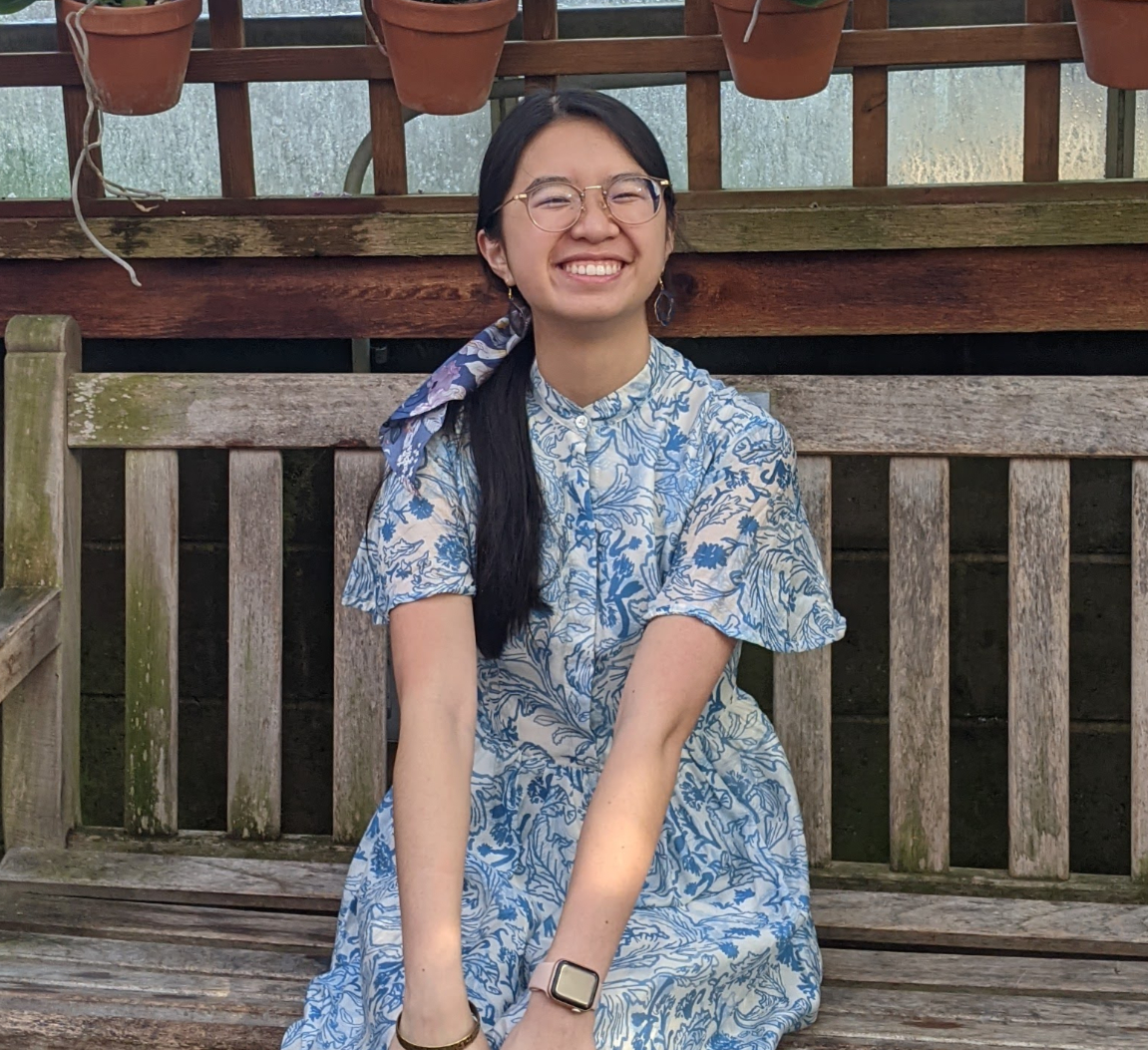
Tara Jay VuPham (he/him/they/them) is a queer Vietnamese-American writer, editor, and occasional narrative designer. TJ's creative works focus on bodies in translation, and his editorial style emphasizes preserving and elevating lived experiences. He currently juggles the lives of undergraduate student researcher, copyeditor, game designer, tarot reader, and playlist-maker in Atlanta, Georgia. You can find him on Instagram as @tj.eats.words, or at your closest museum or botanical garden reading every sign way too slowly for your liking.


Comments